
Story, Photos, and Video by Jacob Gardner
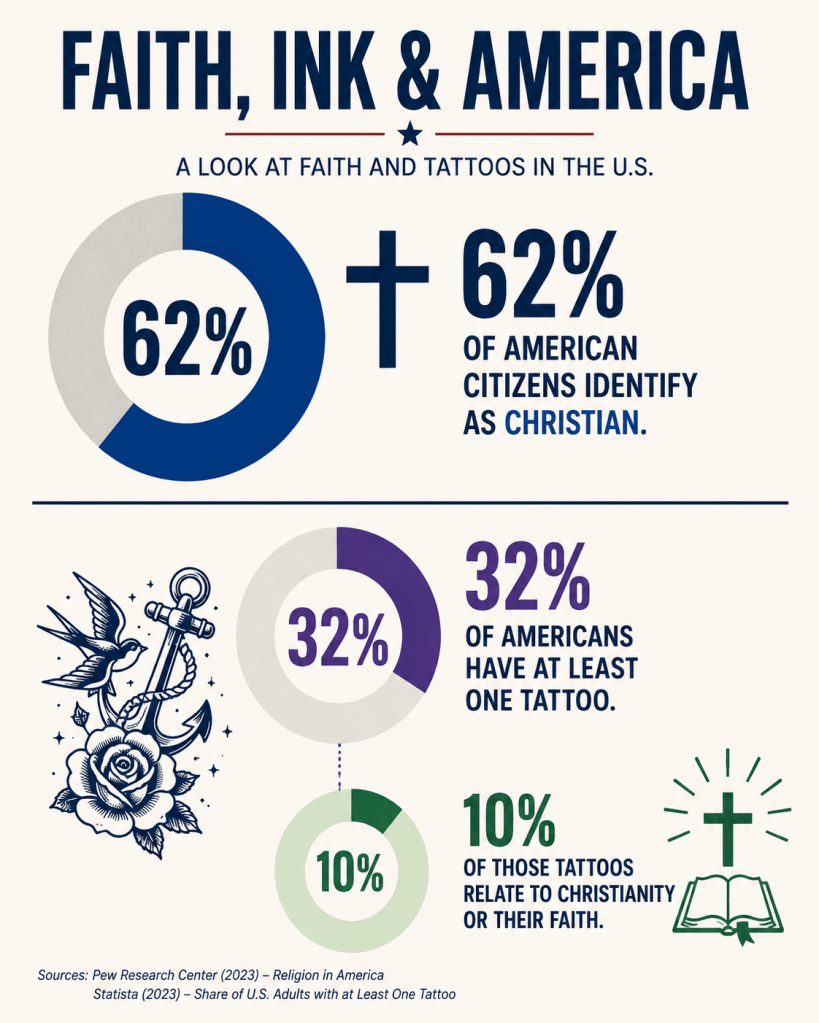
For many, tattoos aren’t just a personal expression or showing an interest in art. They represent overcoming struggle, personal victories, and a permanent reminder of an event or milestone. Those of the Abrahamic faiths, which include Christianity, Judaism, and Islam strictly forbid permanent markings of the skin. According to Pew Research Center, 62% of American citizens identify as Christian. This can include Catholics, Baptists, Seventh Day Adventists; the list goes on an only becomes more complicated as each faith goes through their own schism.
“You shall not make any cuts on your body for the dead nor make any tattoo marks on yourselves: I am the Lord” (NASB) – Leviticus 19:28
The Historical Context
n order to understand why Christians are against their followers getting tattoos, you must understand the context of why. The entirety of Leviticus 19 focuses on idolatry, which in the Christian context means to worship a literal representation of another god that is not the god of Abraham. For many years, it was assumed that tattooing was a pagan mourning practice. However, this subject has been the center of much debate.
In a Biblical Archaeological Society column Unholy Ink: What Does the Bible Say About Tattoos?, Mark W. Chavas provides insight into what history tells us about these tattoo ceremonies.
“Tattooing, an insignia of ownership, was perhaps condemned in Leviticus because it reminded them [the Israelites] of their past….tattooing was also used as a sign of slavery.” – Chavas, 2025.
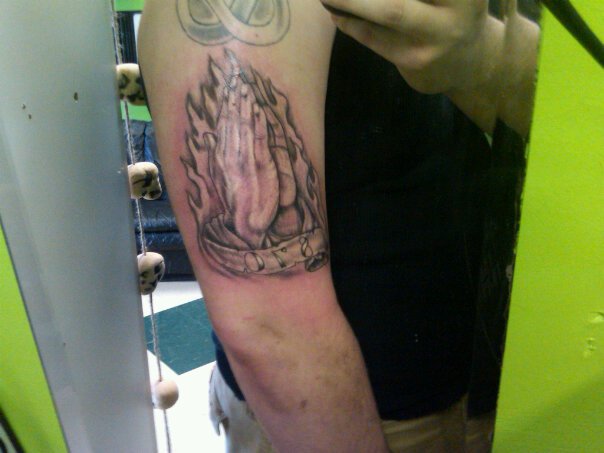
Further on in the Bible, in Isaiah 44:5, the prophet Isaiah writes “The Lord’s” on their hand to set themselves apart from nonbelievers. Several scholars, including Chavas, take this to mean that they are effectively tattooing themselves to show who their master is (God).
From Antiquity to the Modern Era
32% of Americans have at least one tattoo, with 10% of those relating to Christianity or their faith. In a 2025 study, Jerome R. Koch, Ph.D along with Patricia Maloney, Ph.D, and Kevin R. Dougherty, Ph.D analyzed the relationship between tattoos and religion. In an article from Baylor University by Kelly Craine, Koch says “What we’re seeing is that tattoos are becoming modern-day sacred objects,” Koch said. “They’re permanent, deeply personal and often worn as both a proclamation of faith and a private reminder of belief.”
“Religious tattoos represent a unique subculture within faith communities,” Maloney said. “They’re not about trend-following. They’re about identity, memory and meaning.”

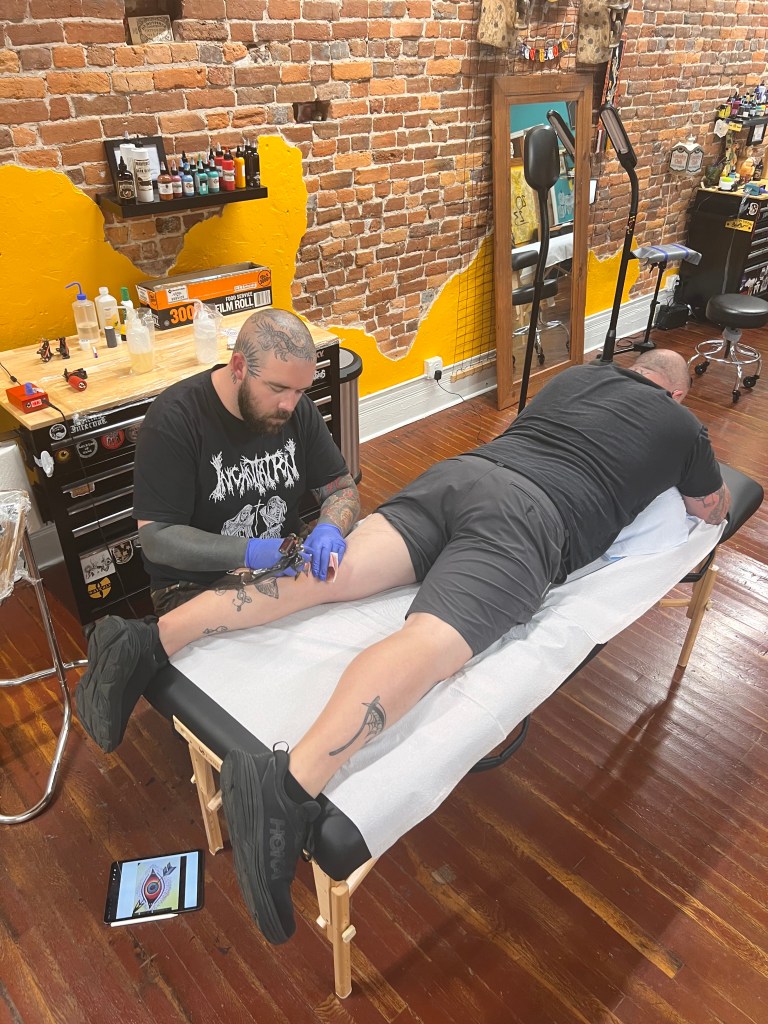
Liberation Tattoo in Springfield, Missouri. Photo by Jacob Gardner
“I think as religion evolves, so do it’s constraints,” says Q, an artist at Liberation Tattoo in Springfield, Missouri, “I remember back in the early 2000’s you didn’t see many tattoos around here. Nowadays, I probably do at least three crosses a month, probably more if it is incorporated into another design.
“Growing up, you didn’t see tattoos in this area like you do now,” says Kim Sanchez, a resident of Taney County, Missouri for 50 years. “You would see bikers and hillbillies with them, that was about it. Nowadays, it’s weird to see those without tattoos in this area.”
While the religious congregation evolves, it hasn’t always been easy. “I never really felt conflicted about getting my religious tattoo.” says Katelynn Harrison. A Missouri native and former Christian, Katelynn did say she was met with some resistance initially. “My grandma, she was not happy when I got my small tattoo. It’s a trinity symbol (also known as a triquetra) to represent the Father, Son, and Holy Ghost. Now, it’s a memory of who I used to be.”
“I wasn’t excited when my kids started getting tattoos, but now that I have let go of being so devout, it doesn’t seem like such a big deal,” says Tracy Hooper, Katelynn Harrison’s mother. “I signed her waiver to get her first one at 17, so I’d say that the mindset has definitely changed.”
Watch the interview with Katelynn Harrison below.
“In Belize, tattoos aren’t so popular. You will see a lot of the indigenous peoples with them, but for the Belizean side, there’s not many,” says Leroy Sanchez. “Aside from our area, Punta Gorda, you won’t see them be so common.”
The Rise of Tattoos in America
Tattooing became popular in America in the 1800s. As sailors and veterans would return from a voyage, they would come back with “permanent souvenirs”, often times commemorating a visit to a foreign land or proving to other sailors their accomplishments.
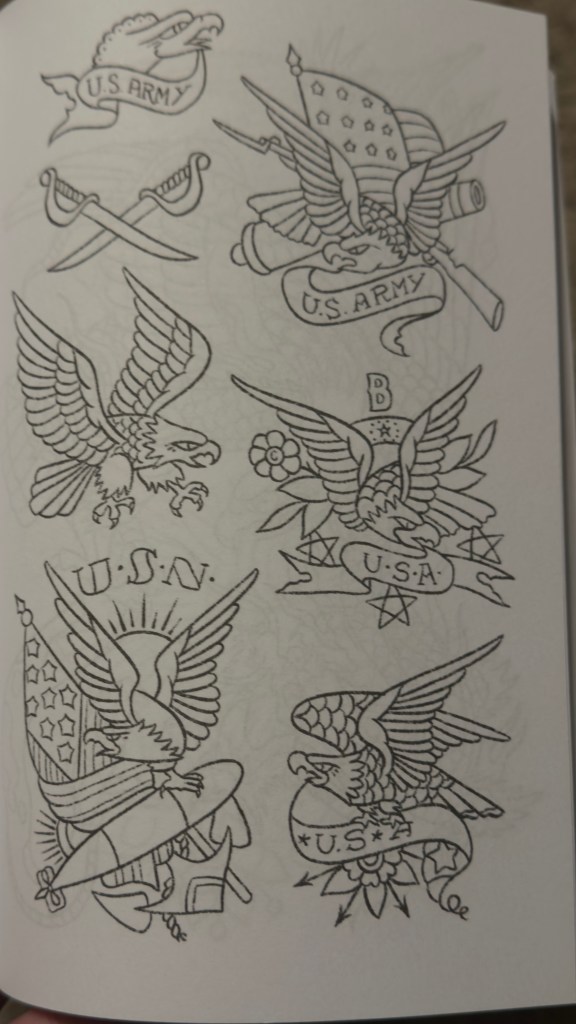
A sailor would get a swallow tattoo for each 5,000 nautical miles traveled, a pig on one foot and a rooster on the other as a ward against drowning, and even crosses on the soles of feet to keep sharks away. While deeply superstitious, these tattoos served the same purpose as religious tattoos do now: a personal show of beliefs.
At the turn of the 20th Century, “freak-show” acts featuring tattooed people were commonplace in the circus. Possibly the most famous was Maude Wagner, wife of one of the founding fathers of tattooing Gus Wagner, brought tattoos to the forefront of popular culture.
It wasn’t until the mid-1970’s that the public became comfortable with tattoos on those who weren’t veterans or sailors. Even into the late 2010’s, many older folks equate tattoos to jail-time.
Christian Tattoos Have a Rich Tradition
Christians getting tattooed isn’t new, though. The Razzouk family in Jerusalem have been tattooing pilgrims to the holy land for the last twenty-eight generations. In fact, crusaders in the 11th century would often get a cross tattoo both as proclamation of faith and as proof that they had visited the holy land of Jerusalem.
In Vietnam, soldiers would often get a cross tattooed before going in-country in place of wearing a physical cross. During the Iraq and Afghanistan wars, crosses and other religious symbolism were commonplace. Recently, United States Secretary of War Pete Hegseth has been shown to have a “Crusader’s Cross” tattoo, right above an arabic script tattoo that means “infidel” or non-believer of Islam.
A Call for More Tattoos in Church Pews
Russell Moore, president of the Ethics and Religious Liberty Commission (ERLC) of the Southern Baptist Convention, says that “U.S. Sen. Rand Paul (R-Ky.) often tells audiences, “Republican Party events need more people with tattoos.” It struck me, as I heard him say this, that this is kind of what evangelical Christians ought to be saying about our churches.” As the population surrounding the church evolves, so must the church.
Not everyone with tattoos is an unbeliever or has lived a hard life, of course. But the larger point remains, how many people don’t listen to our gospel message because they assume they don’t “look” like the kind of people who would follow Jesus? – Russel Moore
In a 2023 survey, The Association of Religious Data Archives (ARDA) found that 92% of religious respondents had a positive attitude towards tattoos. In fact, roughly 1 in 5 Christians have a tattoo or plan to get one in the future.
Looking to the Future
Given the data from the Pew Research Center, it’s clear that tattoos aren’t going anywhere as far as Christianity is concerned. In fact, the data leans more toward the conclusion that there will be far more tattooed Christians in church on Sundays if the data continues its upward trend.
For Southwest Missouri, which is known as the “buckle of the Bible Belt” to locals, tattoos are becoming more and more common. As of May 01, 2026, there are over 95 licensed tattoo shops in Springfield, Missouri alone. These shops make up 16% of tattoo shops in Missouri alone, with St. Louis and Kansas City leading the charge.
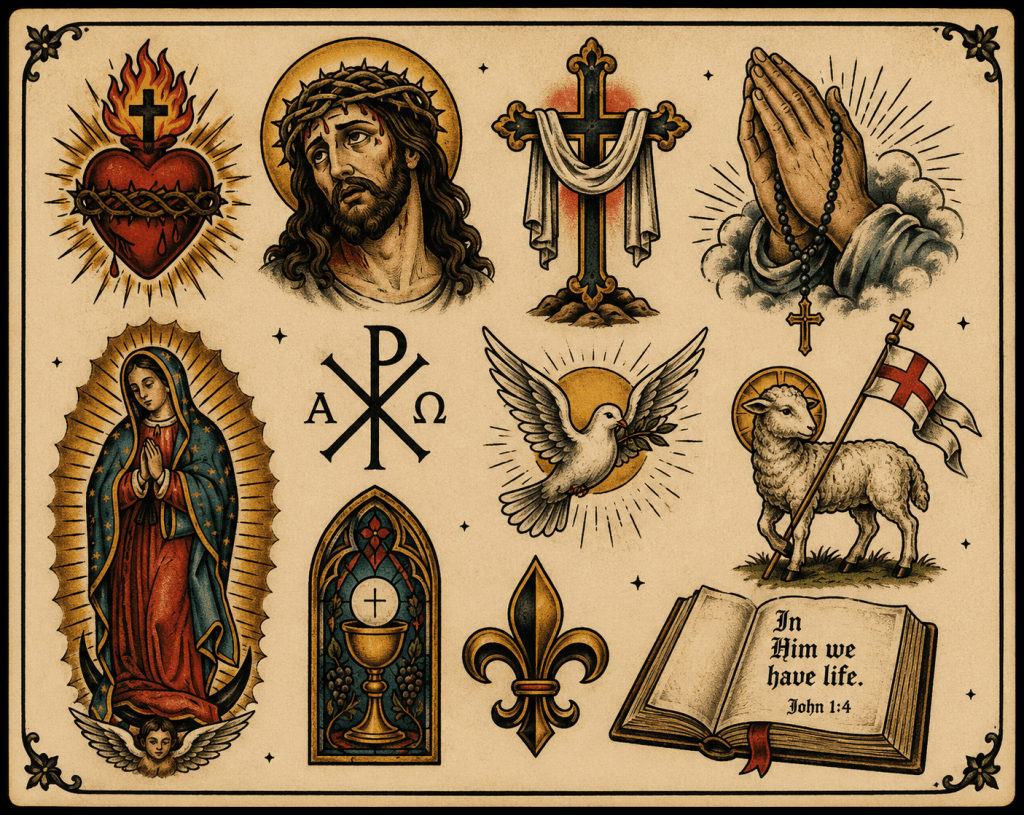
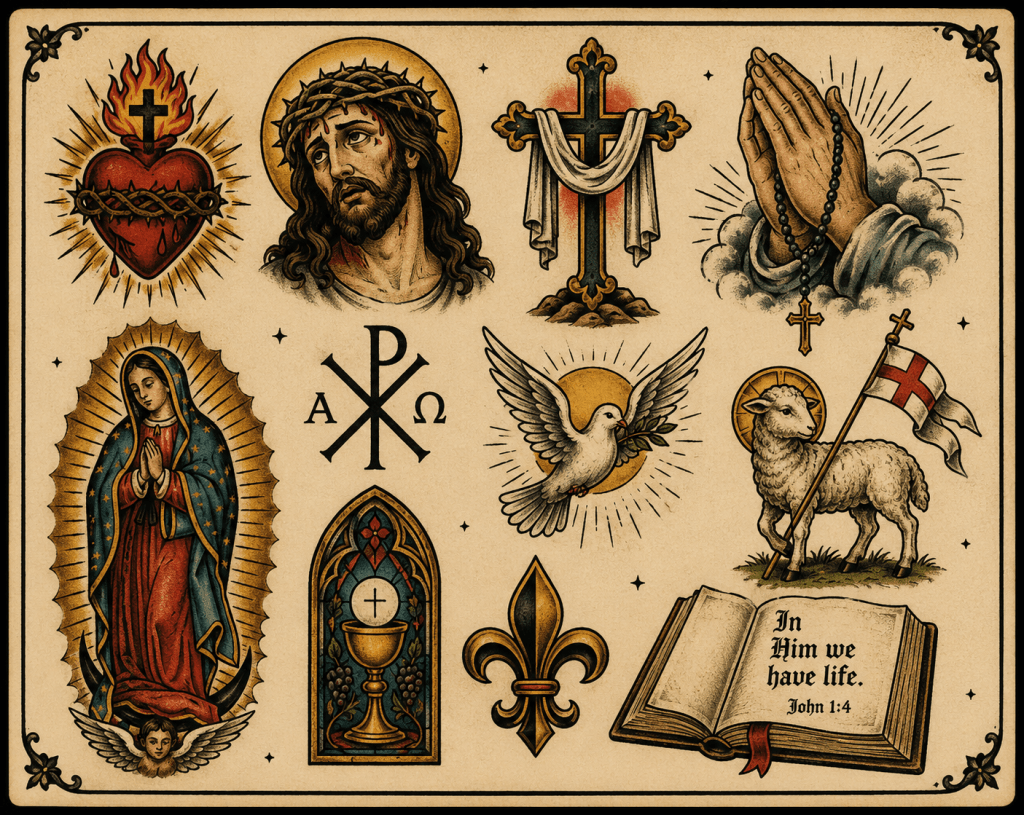
Thinking about getting a Christian-related tattoo? Check out this Pinterest board by Jacob Gardner!







Leave a Reply